WaTnTheHell
Holding Politicians Accountable: Are They Failing Our Community?

Holding Politicians Accountable: Are They Failing Our Community?

8 minutes read

In Los Angeles, people often ask a simple question: if elected officials are supposed to serve the public, why do many residents feel like they’re not getting results? The answer may vary by office, but the path to accountability is consistent: demand transparency, document outcomes, and use the law to force answers.

At the center of our discussion is a community belief that elected leaders are failing—“I feel they’re failing the community”—especially when there are reports online raising concerns about misuse of public resources. Whether those concerns ultimately prove to be misconduct or not, the public still has strong legal tools to examine what happened, what was spent, and what decisions were made behind closed doors or without meaningful oversight.

What “accountability” means in practice

Accountability isn’t just anger or slogans. It’s:

  • verifying what officials promised versus what they delivered,
  • requiring open meetings and proper procedures,
  • using public records laws to see spending, contracts, communications, and votes,
  • and pushing for audits, investigations, and legal remedies when wrongdoing is alleged.
  • The public right to open government (California)
  • California’s open-meeting framework is designed specifically to curb secrecy and allow residents to participate and scrutinize decisions.
  1. Ralph M. Brown Act (local agencies) The Brown Act—California’s “sunshine law”—is meant to ensure the public’s right to attend meetings of local legislative bodies and to prevent misuse of the democratic process by secret actions. It is construed broadly in favor of openness, with closed-session exceptions interpreted narrowly.

It applies to meetings of local legislative bodies covered by state law (including city councils and other local governing bodies), and it’s the backbone for challenging violations when public agencies fail to provide transparency.

  1. Bagley-Keene Open Meeting Act (state bodies) This is the corresponding law for state-level bodies, not your core Los Angeles city/county work—but it matters when officials sit on state boards or commissions. The underlying principle is the same: public access and participation.

The public right to public records (California CPRA)

Accountability requires evidence. California’s California Public Records Act (CPRA) gives residents the right to access writings that relate to the conduct of public business, regardless of physical form.

  1. CPRA defines “public records” broadly and requires agencies to make records available subject to specific exemptions.
  2. Agencies must respond with a determination within 10 days, with limited extensions in “unusual circumstances.”
  3. The right of access is also grounded in the California Constitution (often described through the “Sunshine Amendment”).

If you suspect money is being misused, CPRA is often the most direct way to obtain:

  • budget documents and line-item spending,
  • contracts and amendments,
  • reimbursement records,
  • communications about procurement or oversight,
  • emails/letters and other agency writings related to decisions.

Read more →
Homeless Problem in Los Angeles: Why Billions Haven't Ended the Crisis

Homeless Problem in Los Angeles: Why Billions Haven't Ended the Crisis

9 minutes read

The homeless problem in Los Angeles is visible beside freeways, transit stations, parks, and business districts. Yet the region also has great wealth, strong job demand, and years of public spending. Why does homelessness remain so widespread?

The answer involves several failures at once: high housing costs, low wages, limited affordable homes, health needs, displacement, and a fragmented public system. “No one is doing anything” captures public anger, but it isn’t fully accurate. Government agencies, nonprofits, outreach workers, and housing providers are acting. Their results remain too slow for the size of the crisis.

Homelessness also takes many forms. Some people sleep in vehicles, shelters, interim housing, or encampments. Others stay with friends or family, while people experiencing chronic homelessness may live outside for years.

What Los Angeles Homelessness Data Show
The latest count shows progress and a crisis
The latest finalized 2025 LAHSA results counted 72,308 people across Los Angeles County and 43,699 within the City of Los Angeles. The figures came from a point-in-time count conducted across the county in February 2025, using an unsheltered street count and data on people in shelters and other temporary programs.

Countywide homelessness fell 4%, while homelessness in the city fell 3.4%. Unsheltered homelessness dropped 9.5% in the county and 7.9% in the city. Sheltered homelessness increased, which suggests that some people moved indoors rather than disappeared from the system.

A point-in-time count measures people on a small number of nights. It doesn’t show everyone who becomes homeless during a full year. Weather, volunteer turnout, shelter access, movement between locations, and counting methods can also change the result.

Read more →
Contact

Contact

7 minutes read

We'd Love to Hear From You

Have a crazy story?

Found an internet scam?

Caught someone spreading misinformation?

Have evidence that deserves a closer look?

Need to report a website, influencer, company, or trend that's misleading the public?

We want to hear from you.

At WaTnTheHell.com, we investigate stories, verify facts whenever possible, and encourage critical thinking. While we can't promise every submission will become an article, we carefully review every legitimate tip we receive.


Ways to Contact Us

General Questions

For general questions, comments, or website inquiries:

Email: contact[at]watnthehell[dot][com]


News Tips & Story Ideas

Know about something unbelievable?

Send us:

  • Story ideas
  • Internet scams
  • Misleading advertisements
  • Fake news
  • Clickbait articles
  • AI-generated misinformation
  • Suspicious websites
  • Corporate deception
  • Political claims (with sources)
  • Consumer warnings

Email: tips[at]watnthehell[dot][com]


Fact Check Requests

Think something online isn't true?

We'll take a look.

Please include:

  • A link to the original content
  • Screenshots (if available)
  • Why you believe it's misleading
  • Any supporting evidence

Email: factcheck[at]watnthehell[dot][com]


Report a Scam

If you've encountered:

  • Phishing emails
  • Fake websites
  • Romance scams
  • Cryptocurrency scams
  • Investment fraud
  • Tech support scams
  • Identity theft attempts
  • Social media scams
  • Please include as much detail as possible.

Email: scams[at]watnthehell[dot][com]


Media & Press

Journalists, podcasts, radio shows, television programs, and other media organizations can contact us regarding interviews or collaborations.

Email: media[at]watnthehell[dot][com]


Business & Advertising

Interested in ethical advertising or sponsorship opportunities?

We only work with companies whose products and services align with our values of honesty and transparency.

Email: partners[at]watnthehell[dot][com]


Submit a Story

Use our online submission form to send:

  • Photos
  • Videos
  • Documents
  • Screenshots
  • News links
  • Public records
  • Supporting evidence

The more information you provide, the easier it is for us to investigate.


Before You Submit

Please remember:

  • Verify your information whenever possible.
  • Tell us how you obtained the information.
  • Include links or public sources if available.
  • Do not send confidential or illegally obtained material.
  • Do not submit knowingly false information.

False reports waste valuable investigative time.


Our Editorial Standards

We strive to:

  • Verify factual claims before publication.
  • Clearly distinguish news from opinion.
  • Correct errors when new information becomes available.
  • Respect privacy and applicable laws.
  • Avoid publishing unsupported accusations.

Our goal is to inform readers—not to spread rumors.


Response Time

We typically respond to inquiries within 2–5 business days.

Breaking news tips and urgent reports are reviewed as quickly as possible.


Follow Us

Stay connected for the latest investigations, internet oddities, and fact-based commentary.

YouTube 


Privacy Notice

Information submitted through our contact forms is used only to review your inquiry or investigate your submission. We do not sell your personal information.

If you wish to remain anonymous, simply let us know in your message. While we will make reasonable efforts to protect confidential sources, please avoid sending highly sensitive information through unsecured email.


Thank You

Thank you for helping us expose misinformation, challenge misleading narratives, and encourage critical thinking.

Because reality doesn't need fiction.

When Life Happens on the Side of the Street.

When Life Happens on the Side of the Street.

2 minutes read

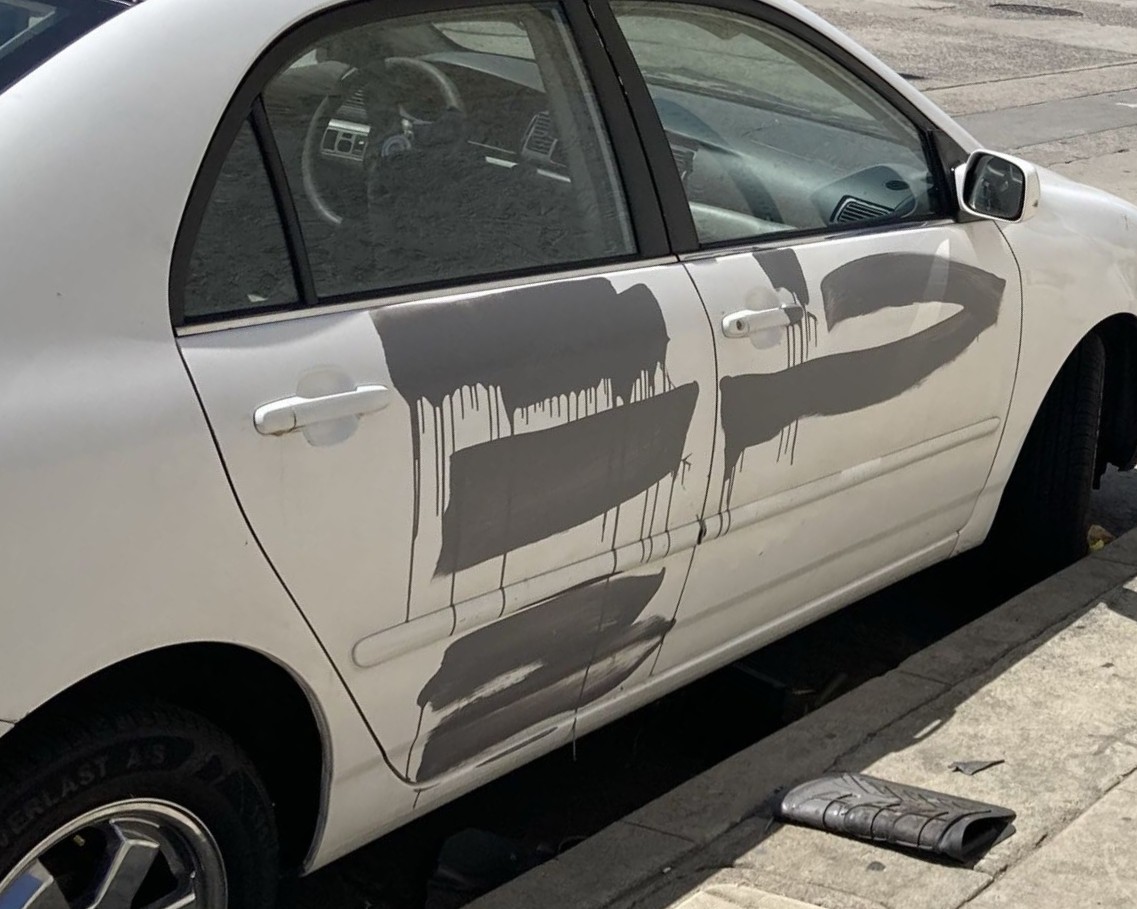
But what about the time when a man calmly stripped his entire car down right on the neighborhood sidewalk? Sounds wild, right?

On the edge of a bustling city street, where the hum of traffic mingled with distant conversations and the occasional clang of construction, life unfolded in a way few noticed. There, amidst the concrete and faded paint, a homeless man worked quietly on a good-looking car. The vehicle wasn't battered or rusted, its tires and windows in good condition, but to him, it was more than just a car—it was a puzzle waiting to be solved.

Without a single tool, he used his bare hands and a keen eye to dismantle parts of the car. His fingers, rough and calloused, pried open the door latch and carefully removed pieces of metal and rubber. Each movement was deliberate, practiced, as if he had done this many times before. To an onlooker, it might have seemed impossible, but to him, it was survival—a way to gather whatever scraps he could sell, barter, or repurpose.

People walked by, some casting curious glances, others quickening their pace to avoid the reality of a man living on the edge of society. Yet, in that moment, he was undeterred. The street was his workspace, the car his challenge, and his determination a quiet defiance against the odds stacked against him.

He paused briefly, wiping sweat from his brow, eyes scanning the street for any sign of trouble or opportunity. Despite the harshness of his situation, his spirit was resilient—a testament to the human will to adapt and endure, even when life happens on the side of the street.

About

About

~1 minute read

WaTnTheHell.com exists to expose misinformation, internet deception, ridiculous trends, scams, manipulation, hypocrisy, and the unbelievable stories shaping today's culture.

Our mission is to challenge narratives, encourage critical thinking, and present evidence before opinions. In an online world filled with clickbait, outrage, and manufactured drama, we strive to separate fact from fiction while never losing our sense of humor.

Copyright 2026