WaTnTheHell
Holding Politicians Accountable: Are They Failing Our Community?

Holding Politicians Accountable: Are They Failing Our Community?

8 minutes read

In Los Angeles, people often ask a simple question: if elected officials are supposed to serve the public, why do many residents feel like they’re not getting results? The answer may vary by office, but the path to accountability is consistent: demand transparency, document outcomes, and use the law to force answers.

At the center of our discussion is a community belief that elected leaders are failing—“I feel they’re failing the community”—especially when there are reports online raising concerns about misuse of public resources. Whether those concerns ultimately prove to be misconduct or not, the public still has strong legal tools to examine what happened, what was spent, and what decisions were made behind closed doors or without meaningful oversight.

What “accountability” means in practice

Accountability isn’t just anger or slogans. It’s:

  • verifying what officials promised versus what they delivered,
  • requiring open meetings and proper procedures,
  • using public records laws to see spending, contracts, communications, and votes,
  • and pushing for audits, investigations, and legal remedies when wrongdoing is alleged.
  • The public right to open government (California)
  • California’s open-meeting framework is designed specifically to curb secrecy and allow residents to participate and scrutinize decisions.
  1. Ralph M. Brown Act (local agencies) The Brown Act—California’s “sunshine law”—is meant to ensure the public’s right to attend meetings of local legislative bodies and to prevent misuse of the democratic process by secret actions. It is construed broadly in favor of openness, with closed-session exceptions interpreted narrowly.

It applies to meetings of local legislative bodies covered by state law (including city councils and other local governing bodies), and it’s the backbone for challenging violations when public agencies fail to provide transparency.

  1. Bagley-Keene Open Meeting Act (state bodies) This is the corresponding law for state-level bodies, not your core Los Angeles city/county work—but it matters when officials sit on state boards or commissions. The underlying principle is the same: public access and participation.

The public right to public records (California CPRA)

Accountability requires evidence. California’s California Public Records Act (CPRA) gives residents the right to access writings that relate to the conduct of public business, regardless of physical form.

  1. CPRA defines “public records” broadly and requires agencies to make records available subject to specific exemptions.
  2. Agencies must respond with a determination within 10 days, with limited extensions in “unusual circumstances.”
  3. The right of access is also grounded in the California Constitution (often described through the “Sunshine Amendment”).

If you suspect money is being misused, CPRA is often the most direct way to obtain:

  • budget documents and line-item spending,
  • contracts and amendments,
  • reimbursement records,
  • communications about procurement or oversight,
  • emails/letters and other agency writings related to decisions.
Read more →
Homeless Problem in Los Angeles: Why Billions Haven't Ended the Crisis

Homeless Problem in Los Angeles: Why Billions Haven't Ended the Crisis

9 minutes read

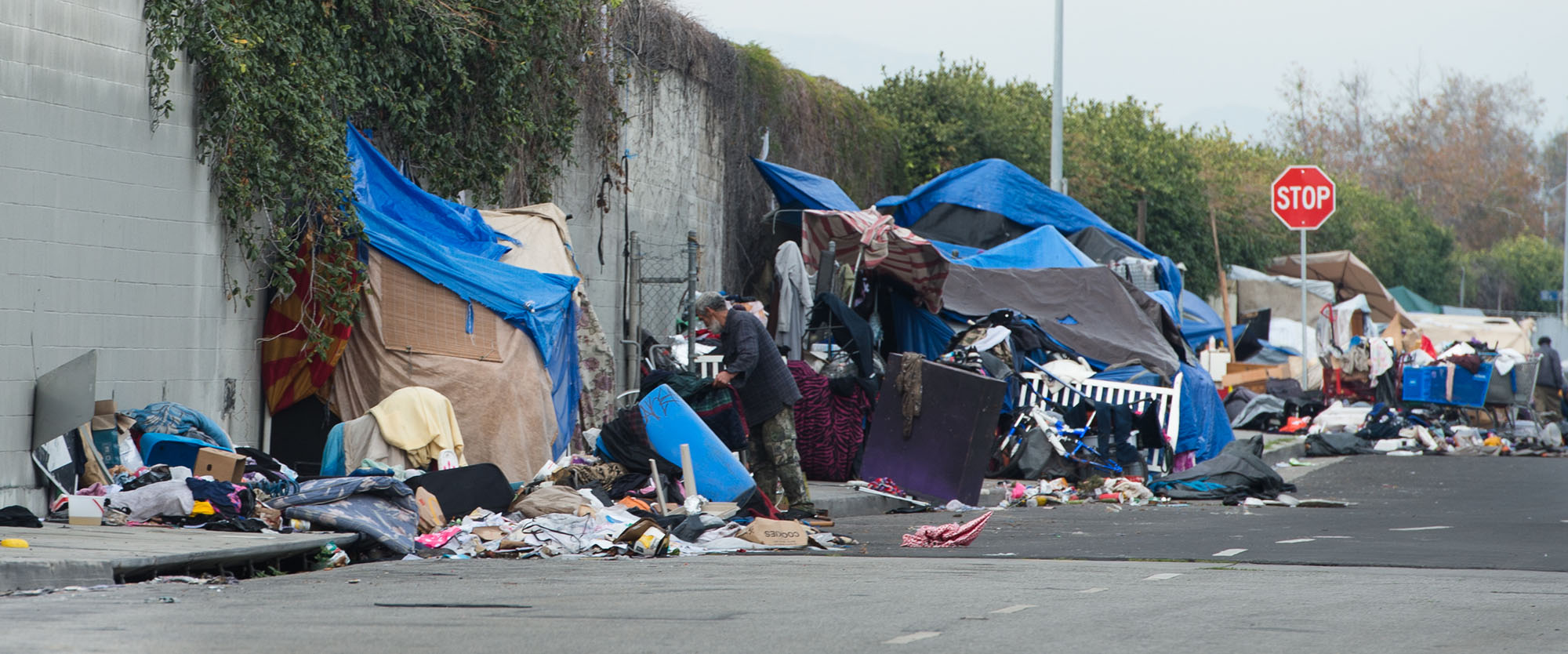
The homeless problem in Los Angeles is visible beside freeways, transit stations, parks, and business districts. Yet the region also has great wealth, strong job demand, and years of public spending. Why does homelessness remain so widespread?

The answer involves several failures at once: high housing costs, low wages, limited affordable homes, health needs, displacement, and a fragmented public system. “No one is doing anything” captures public anger, but it isn’t fully accurate. Government agencies, nonprofits, outreach workers, and housing providers are acting. Their results remain too slow for the size of the crisis.

Homelessness also takes many forms. Some people sleep in vehicles, shelters, interim housing, or encampments. Others stay with friends or family, while people experiencing chronic homelessness may live outside for years.

What Los Angeles Homelessness Data Show
The latest count shows progress and a crisis
The latest finalized 2025 LAHSA results counted 72,308 people across Los Angeles County and 43,699 within the City of Los Angeles. The figures came from a point-in-time count conducted across the county in February 2025, using an unsheltered street count and data on people in shelters and other temporary programs.

Countywide homelessness fell 4%, while homelessness in the city fell 3.4%. Unsheltered homelessness dropped 9.5% in the county and 7.9% in the city. Sheltered homelessness increased, which suggests that some people moved indoors rather than disappeared from the system.

A point-in-time count measures people on a small number of nights. It doesn’t show everyone who becomes homeless during a full year. Weather, volunteer turnout, shelter access, movement between locations, and counting methods can also change the result.

Read more →
When YouTube Creators Stretch the Truth!

When YouTube Creators Stretch the Truth!

3 minutes read

A Closer Look at YouTube Clickbait Culture

If you’ve spent even a little time on YouTube lately, you might have noticed a trend that’s hard to ignore: creators seem to be bending the truth — or sometimes outright lying — just to rack up clicks, subscribers, and comments.

It’s almost like there’s an unspoken rule that the bigger the exaggeration, the better the engagement. But what’s really going on here, and why does it matter?

Let’s dive into the world of YouTube content creators and their sometimes wild tactics to capture attention. This isn’t about shaming creators, but understanding a culture that’s evolved around the fierce competition for eyeballs.

The Click, The Hook, and The Big Lie

At its heart, YouTube is a platform where attention is currency. The more views a video gets, the more likely the creator can turn that into income, sponsorships, or fame. So, the incentive to stand out is huge. Unfortunately, this often leads to some creators taking shortcuts by:

Overhyping titles and thumbnails: Ever clicked on a video titled “You Won’t Believe What Happened Next!” only to find something pretty mundane? That’s clickbait in action, designed to spark curiosity at the expense of honesty.

Fabricating stories or drama: Some creators invent conflicts, exaggerate events, or distort facts to make their content seem more thrilling or controversial.
Manipulating emotions: Videos that prey on fear, outrage, or extreme excitement can push viewers to react impulsively and share, boosting engagement numbers.

Read more →
City of Porn

City of Porn

~1 minute read

Los Angeles is a city of vibrant culture, stunning scenery, and diverse neighborhoods, but like any major urban area, it faces its share of challenges. If you live around Figueroa Street, you may have noticed an unfortunate issue that has been hard to ignore: the visible presence of prostitution, sometimes in alarming circumstances such as individuals being completely naked. This is not just a matter of discomfort; it impacts the sense of safety and dignity for residents and visitors alike.

What’s particularly frustrating is the perception that law enforcement has not taken strong enough action to address this problem. Many residents feel overlooked or unheard, which only adds to the strain on the community fabric. However, it’s important to understand that this kind of issue is complex, involving social, legal, and enforcement dimensions.

California Laws Addressing Prostitution
California has clear laws against prostitution that aim to discourage and penalize such activities, including:

Penal Code Section 647(b): This law makes it illegal to solicit or agree to engage in prostitution. It covers both the person offering sexual services and the person seeking them.
Penal Code Section 266i: This statute prohibits pimping and pandering, meaning it’s illegal to procure or manage someone for prostitution.

When Life Happens on the Side of the Street.

When Life Happens on the Side of the Street.

2 minutes read

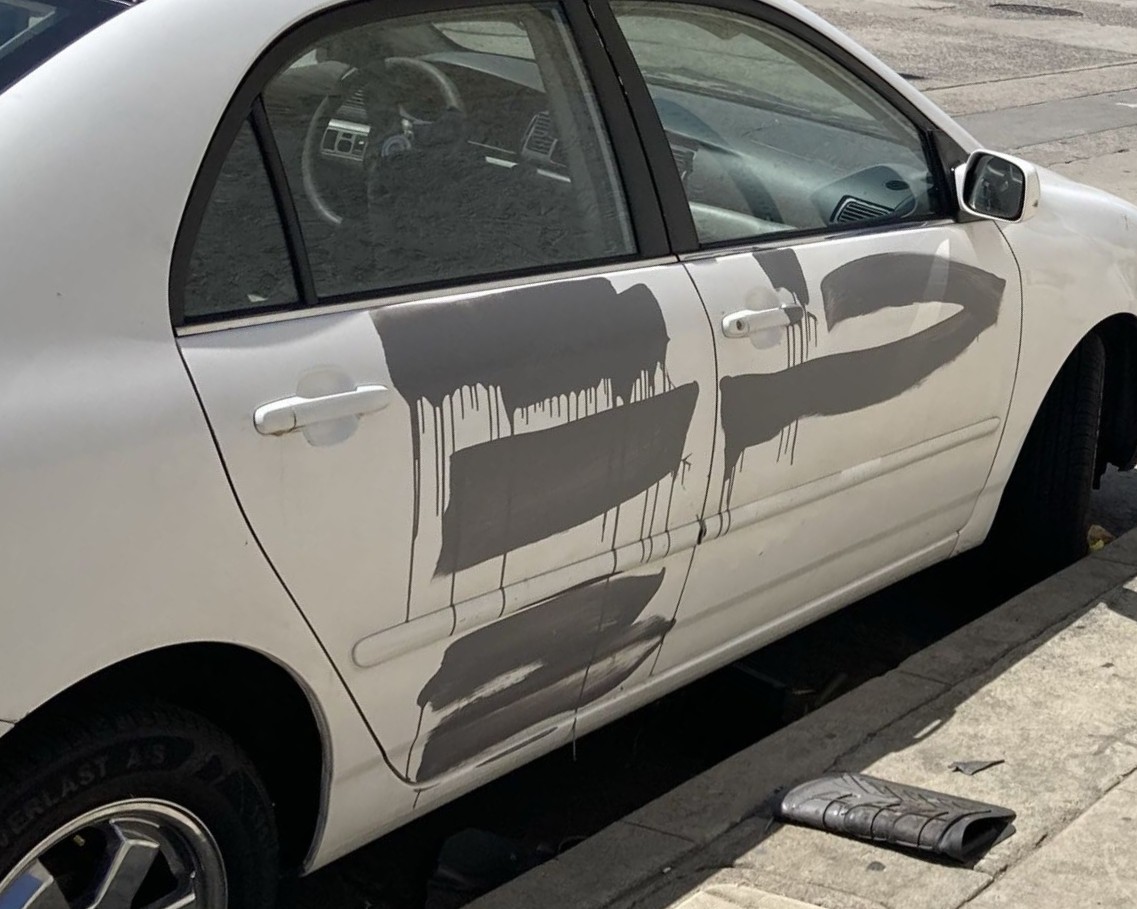
But what about the time when a man calmly stripped his entire car down right on the neighborhood sidewalk? Sounds wild, right?

On the edge of a bustling city street, where the hum of traffic mingled with distant conversations and the occasional clang of construction, life unfolded in a way few noticed. There, amidst the concrete and faded paint, a homeless man worked quietly on a good-looking car. The vehicle wasn't battered or rusted, its tires and windows in good condition, but to him, it was more than just a car—it was a puzzle waiting to be solved.

Without a single tool, he used his bare hands and a keen eye to dismantle parts of the car. His fingers, rough and calloused, pried open the door latch and carefully removed pieces of metal and rubber. Each movement was deliberate, practiced, as if he had done this many times before. To an onlooker, it might have seemed impossible, but to him, it was survival—a way to gather whatever scraps he could sell, barter, or repurpose.

People walked by, some casting curious glances, others quickening their pace to avoid the reality of a man living on the edge of society. Yet, in that moment, he was undeterred. The street was his workspace, the car his challenge, and his determination a quiet defiance against the odds stacked against him.

He paused briefly, wiping sweat from his brow, eyes scanning the street for any sign of trouble or opportunity. Despite the harshness of his situation, his spirit was resilient—a testament to the human will to adapt and endure, even when life happens on the side of the street.

Copyright 2026